Commercial land shortage drives property prices to record high
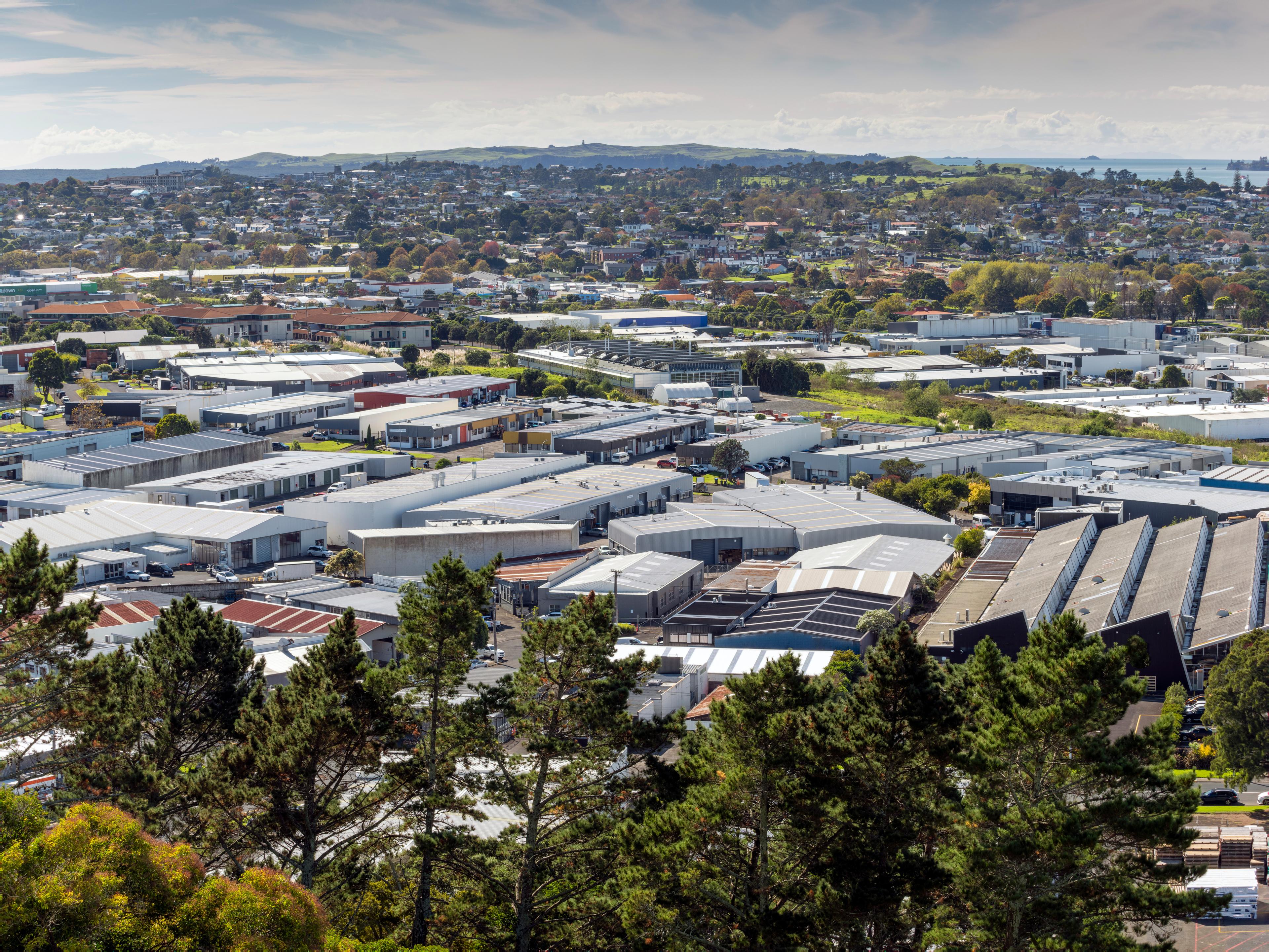
A shortage of suitably-zoned commercial and industrial land is pushing Auckland’s property market to record-high levels, as competition for development-ready sites intensifies.
Industry experts warn the constraints will increase the cost of establishing and expanding businesses in the region, with higher land prices flowing through to development, logistics and ultimately consumers.
New data from realestate.co.nz shows Auckland’s industrial and commercial land values have reached an average of $1,190 per square metre in the 12 months to March 2026, the highest level recorded in at least a decade and up more than 600 percent from ten years ago.
The pressure is also being felt in other parts of the sector, with the average asking price for industrial buildings in Auckland now at over $3.5 million for the first time, reflecting the lack of availability of well-located sites in the country’s largest market.
At the same time, the average land area of industrial properties available for sale has fallen to a record low of 1,864 sqm, from 5,212 sqm a decade ago, a decline of more than 64%, signalling a shift toward smaller, more constrained site offerings.
Search data indicates demand is being driven primarily by domestic investors, with international activity easing over the past year.
While macro economic factors have slowed transaction volumes in recent years, particularly for land, the underlying shortage of development-ready sites continues to place upward pressure on pricing when assets do come to market.
Sarah Wood, CEO of realestate.co.nz, says the data highlights a long-term imbalance in the Auckland market, where limited land supply is driving prices.
She says the region remains the primary hub of the New Zealand economy, contributing 38% to national GDP, with shifts in land supply and pricing feeding directly into business costs, investment decisions and economic activity across the rest of the country.
“What we’re seeing is a structural shortage of commercial and industrial land, particularly in Auckland. There simply isn’t enough development-ready land coming to market to meet demand, and that is now being reflected clearly in pricing.
“The step-change in land prices over the past two years in particular isn’t a typical movement. It reflects a situation where supply is no longer keeping pace with demand.
“This is shifting development patterns, with access to suitable sites increasingly dictating how and where projects can occur, particularly for larger-scale industrial users.
“Over time, that affects where businesses locate, how supply chains are structured, and the cost of operating across the wider economy, including the competitiveness of New Zealand’s exports,” she says.
Stephen Hughes, CEO of Drury South Crossing, the country’s largest mixed-use development, says the same constraints are playing out on the ground, with limited availability of large, serviced industrial sites across the wider Auckland region.
“Businesses are placing a premium on land that is build-ready and well connected to transport modes, power and fibre. In a constrained market, those locations are becoming harder to secure and that is flowing directly into pricing.”
He says developments such as Drury South Crossing are becoming increasingly rare, with only a small number of large, industrial-zoned sites still available for purchase.
“We have sold more than 100 hectares of land at Drury South over the past five years, and with just 30 hectares remaining, we won’t be able to accommodate every requirement. Early movers can still secure a site, but the supply of greenfield industrial land at this scale across the region is becoming increasingly limited.”
Hughes says rising electricity demand is also reshaping site requirements, with many existing industrial locations unable to support modern business needs.
“It’s not just data centres, it’s everyday businesses needing more power for automation, machinery and electric vehicle fleets, and many older sites simply can’t support that without significant upgrades.”
Wood says there has been a noticeable shift in the commercial property market, where constrained land supply is dictating pricing, development patterns and business costs, with supply continuing to tighten.
“We’re seeing a move toward a land-constrained market, where site availability is becoming more important than the buildings themselves.
“Our data shows new commercial and industrial land listings have fallen 4 percent over the past year, from 211 to 203, reflecting the limited supply conditions.
“Higher land costs don’t stay in the property market, they affect businesses, logistics and ultimately consumers.
“Addressing this will require faster zoning, better infrastructure and a more proactive approach to planning commercial land supply,” she says.
Wood says buyer activity on the platform is strengthening, with commercial search volumes up 12 percent over the past year, while active users in the sector have increased 21 percent over the same period.
“Commercial for sale property searches increased 12 percent in the 12 months to March 2026, with a lift in engagement from domestic investors and occupiers.
“According to our search data, international interest has softened, suggesting the current upswing is being driven primarily by local capital.”
Wood says the alignment of rising land values and increased buyer activity suggests a more active period ahead.
“When we see more people searching, more activity in the market, and rising values, it typically indicates momentum is building.
“If these trends continue, we would expect stronger transaction volumes through the rest of 2026.
“Over time, this risks pushing industrial activity further from key centres, increasing transport costs and reducing supply chain efficiency,” she says.
Interested in commercial opportunities? Check them out here.
For media enquiries, please contact:
Hannah Franklin | hannah@realestate.co.nz