Hundreds of millions needed in ultra-luxury housing as golden visa changes take effect
Hundreds of millions of dollars in residential investment is urgently needed to address a growing shortage of homes suitable for ultra-high net worth US and UK buyers, according to new data.
The call comes as changes to New Zealand’s Active Investor Plus (AIP) visa regime take effect. From 6 March, Active Investor Plus investors who have secured New Zealand residence are eligible to obtain Overseas Investment Office consent to buy or build residential property valued above NZD $5 million.
Although the policy threshold is set at $5 million, analysis of search and listing activity suggests the tightest supply constraints sit significantly higher in the market, particularly in the $10 million-plus tier.
Industry experts say a rapidly emerging category of ultra-high net worth buyers are seeking homes well in excess of $5 million and a shortage of stock, particularly in Auckland and Queenstown, has the potential to impact the success of the AIP visa initiative.
They say the housing market has not had time to adjust to the number of buyers set to enter NZ in the coming months.
New data from realestate.co.nz shows that there were 36,000 overseas-based searches for homes $5 million and above over the past year. Of those, approximately 42 percent were for properties priced in excess of $5 million, rather than sitting exactly at the minimum threshold required by the AIP visa criteria.
As of March, realestate.co.nz has 616 properties nationwide priced at $5 million and above, however only 142 listings in the $10 million-plus bracket, with 100 of these in Auckland. The number of houses valued above this threshold drops off sharply with each incremental million.
To date there have already been 573 applicants from 33 countries under the AIP visa programme.
Sarah Wood, CEO of realestate.co.nz, says the very top end of New Zealand’s residential property market is relatively immature by global standards.
“The AIP visa programme effectively introduces a positive demand shock into this segment of the market overnight, however the supply has not had a chance to grow organically over time. The result is significant pressure on the supply of houses valued in the tens of millions.”
She says the distribution of that search activity highlights where interest is concentrated.
“The United States accounts for around a fifth (19) percent of international $5 million-plus searches, followed by the United Kingdom at 9 percent and Canada at 4 percent. That profile reflects demand from established wealth markets rather than speculative traffic.”
Wood says that while $5 million-plus overseas searches represent less than one percent of total platform activity, they represent a thin but high-value segment of the market.
“In markets like this, relatively small changes in qualified demand can have an outsized impact on pricing because the available stock is limited.
“Listing volumes in the $5 million-plus bracket have largely tracked broader seasonal trends, with no material supply increase following the visa announcement. That suggests the pipeline at the top end remains structurally constrained rather than responsive to short-term policy changes.”
Luxury property specialist Sarah Liu of Bayleys Real Estate says some of the wealthiest buyers operate exclusively in the $20 million-plus bracket.
“We have qualified clients who will only look at the $20 million-plus range, and they are not cross-shopping in the $5 million to $10 million segment.
“If buyers at that level cannot identify a sufficient pool of appropriate properties, there is a real possibility some may choose not to proceed with the visa and we may lose them to another market.
“At present, the number of homes that genuinely meet international ultra-luxury benchmarks is extremely limited. To provide buyers with a range of options, we would need at least five times the current number of properties valued at $20 million-plus.”
Liu says that while a portion of the ultra-luxury market operates deliberately below the radar, the overall supply remains thin.
“A number of homes in the $20 million-plus bracket are transacted off-market.
“Despite this off-market activity, the pool of properties in this segment remains smaller than the number of enquiries coming through. Liu says there are considerable behavioural differences between a $20 million buyer and a $5 million buyer.
“A $20 million plus buyer is typically focused on exclusivity, architectural significance and international comparability. They are not just buying a home, they are acquiring a legacy asset. Their decision-making is strategic and far less price-sensitive.
“By comparison, a $5 million buyer, while still discerning, is more likely to prioritise school zones, functionality, layout efficiency and relative value within the suburb. They may stretch for the right property, but the evaluation is more locally benchmarked.”
She says patience is another defining characteristic at the very top of the market.
“A buyer at $20 million-plus will not compromise. If the property does not deliver scale, privacy and design pedigree they will wait. They are used to assessing estates in markets such as Sydney, London or Los Angeles. We are also seeing a significant amount of interest coming through from Hong Kong and South East Asia.
“Most buyers in this bracket are not looking for a renovation project. They value time, certainty and quality execution. While a small number may consider redevelopment if they cannot find the perfect property, the overwhelming preference is for a completed, design-led residence with premium finishes and minimal immediate work required.
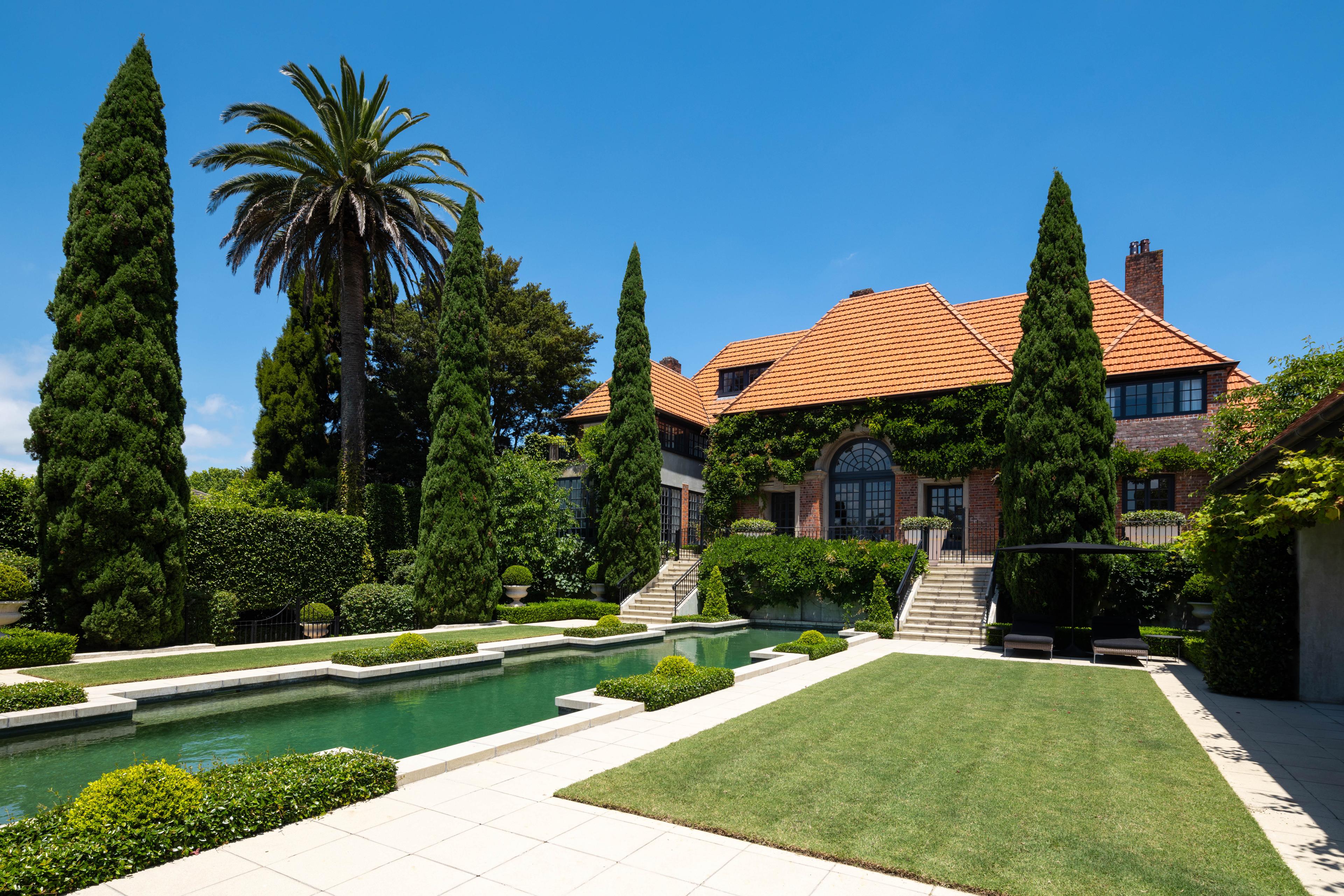
“Common criteria include panoramic water or bush views, often with direct waterfront access, gated security and strong privacy, and substantial garaging capacity, typically for four to eight vehicles. Lift access in multi-level homes, ensuite bathrooms for every bedroom, wine cellars, multiple formal and informal living zones and expansive outdoor entertaining areas are expected rather than optional.
“We do see unusual requests at this level - including commercial-grade wine cellars, full wellness facilities incorporating infrared saunas, steam rooms and ice baths, and collector-level car display garages designed almost as showrooms.
“For waterfront buyers, substantial private jetties capable of accommodating larger vessels are increasingly sought after. Helicopter access potential is sometimes raised in early discussions, although helipads remain rare within Auckland residential zoning.”
Liu says Auckland demand remains high and is concentrated in established blue-chip locations.
“The Eastern Bays, including parts of Orakei, St Heliers, Mission Bay, Kohimarama and Glendowie, continue to attract interest because of their waterfront positioning, views and proximity to private schools. schooling.
“Remuera, particularly within the Double Grammar Zone, and Herne Bay remain consistently sought after for both domestic and offshore buyers.”
She says trophy waterfront homes, elevated properties with expansive water views and substantial landholdings offering privacy are particularly scarce.
“We are also seeing strong enquiry for premium countryside estates, as well as Queenstown and Waiheke Island, where lifestyle appeal and international recognition are key drivers for the global buyers,” says Liu.
Wood says that in global terms, the segment behaves more like a capital market than a traditional housing market.
“Globally, ultra high net worth migration trends have increasingly influenced luxury residential markets in cities around the world.
“New Zealand’s relatively small pipeline of ultra-premium housing means any incremental shift in offshore capital allocation could have a disproportionate effect on pricing and supply.”
She says the development implications are significant.
“Each home in the $20 million-plus category represents a substantial capital project. Delivering even five to ten additional residences that genuinely meet that buyer standard would equate to well over $100 million in residential development.”
“This segment may be small in transaction volume, but it is large in capital intensity. When you aggregate even a limited number of ultra-premium builds, the investment requirement quickly runs into the hundreds of millions.”
“As interest in the $5 million-plus segment continues to build, we are expanding the support we provide to vendors operating at that level.
“We will be introducing a dedicated Golden Visa landing page and more resources designed to help owners of premium properties connect with international buyers more effectively.”
“At the same time, we are assessing how we can further refine the search experience for ultra high net worth buyers who are targeting $20 million-plus homes.
“realestate.co.nz already holds the largest number of $5 million-plus listings nationally, and our focus is on ensuring we remain the primary marketplace for premium and Golden Visa-eligible properties as this segment evolves.”
Wood says that North Americans account for around one in every three Golden Visa applicants and US-based traffic to the platform rose 56 percent year-on-year in January, with growth concentrated in higher-income states including North Carolina, Oregon and Texas.
realestate.co.nz is the home of luxury property. Browse luxury listings here.
For media enquiries, please contact:
Hannah Franklin | hannah@realestate.co.nz